– HLA QA MANAGER, CEDARS SINAI MEDICAL CENTER, United States
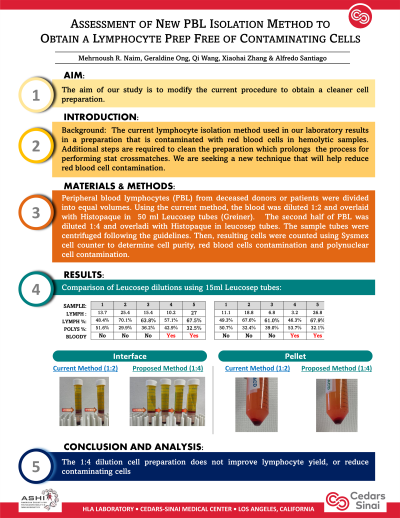
Aim: The current lymphocyte isolation method used in our laboratory results in a preparation that is contaminated with red blood cells in hemolytic samples. Additional steps are required to clean the preparation which prolongs the process for performing stat crossmatches. We are seeking a new technique that will help reduce red blood cell contamination. The goal of our study is to modify the current procedure to obtain a cleaner cell preparation.
Methods: Peripheral blood lymphocytes (PBL) from deceased donors or patients were divided into equal volumes. Using the current method, the blood was diluted 1:2 and overlaid with Histopaque in 50ml Leucosep tubes (Greiner). The second half of PBL was diluted 1:4 and overlaid with Histopaque in Leucosep tubes. The sample tubes were centrifuged following the manufacturer guidelines. Then, resulting cells were counted using Sysmex cell counter to determine cell purity, red blood cells contamination and polynuclear cell contamination.
Results: The lymphocyte interface and cell pellet, after the wash step, appeared similar between the current method and 1:4 diluted blood, with red blood cell contamination observed in all samples. The lymphocyte count was 19%-67% lower in the 1:4 diluted blood. The lymphocyte percentage ranged between 40-68% for both methods. The percentage of polynucleated cell contamination was the same for both methods. As the cell pellet was similar for both methods, the levels of red blood cells contamination appeared unchanged
Conclusion: The 1:4 dilution cell preparation does not improve cell yield or reduce contaminating cells.