– Senior Laboratory Director, Alberta Precision Labs/University of Calgary/ American National Red Cross
Aim: Application of the design thinking process to creation of new healthcare environments combines functionality, efficiency, and empathy for patients and staff. This methodology includes five iterative stages—Empathize, Define, Ideate, Prototype, and Test—and prioritizes understanding user experiences to inform design decisions. Through interviews and observations with end users, designers can identify pain points in the healthcare experience. Relocating a histocompatibility laboratory in the context of a new building presents significant operational and regulatory challenges. The challenge includes ensuring continuity of testing, maintaining accreditation, and revalidating systems without disruption. Here, we describe how our team successfully executed this process and outline replicable strategies for other laboratories undergoing similar transitions.
Methods: A team of healthcare stakeholders was formed, which included laboratory leadership, quality officers, transplant program partners, and facility designers. Using a design thinking model (Table 1), the team empathized with users and stakeholders to understand clinical and operational needs, defined compliance-critical elements (e.g., test environment, specimen tracking), ideated workflows and spatial configurations that aligned with patient care and regulatory goals, prototyped and validated processes in a simulated environment, and tested these prototypes through user feedback, internal audits and mock inspections.
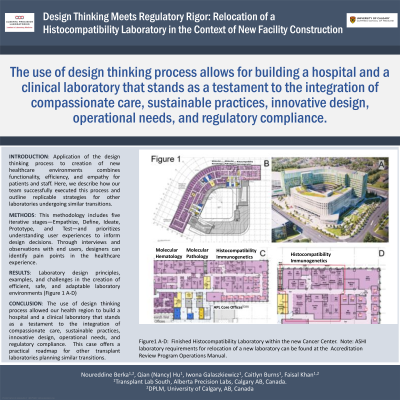
Results: This culminated in submission of a change of facility application to the ASHI Accreditation Review Board in advance of the move and reverification of systems post-move to ensure continued compliance. The relocation was completed with no lapse in testing or accreditation status. The new lab layout (Figure 1 A-E) reduced workflow inefficiencies and improved staff satisfaction. Lessons learned include the importance of early stakeholder alignment, proactive communication with regulators, and structured risk assessment.
Conclusion: The use of design thinking process allowed our health region to build a hospital and a clinical laboratory that stands as a testament to the integration of compassionate care, sustainable practices, innovative design, operational needs, and regulatory compliance. This case offers a practical roadmap for other transplant laboratories planning similar transitions.

.jpg "Noureddine Berka, PhD photo")