– Director in Training, University of Alberta, Canada
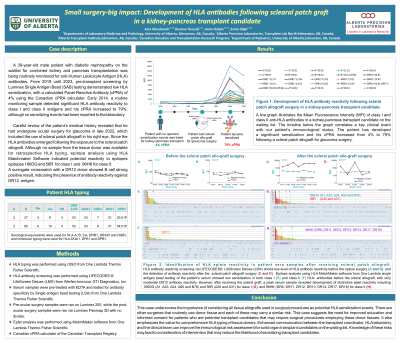
Body: This case highlights a critical yet underappreciated potential source of HLA sensitization in transplant candidates: human tissue allografts. A 39-year-old male with diabetic nephropathy on the waitlist for combined kidney/pancreas transplantation was being routinely monitored for HLA antibodies. From 2019 till 2023, the patient demonstrated low HLA sensitization, with a calculated Panel Reactive Antibody (cPRA) of 4% using the Canadian cPRA calculator. A routine monitoring sample developed significant HLA antibody reactivity to class I and class II antigens and his cPRA increased to 79% (Fig.1 and 2). Although no sensitizing events had been reported to the laboratory, careful review of his medical history revealed that the patient had undergone ocular surgery for glaucoma in 2022, which included the use of a scleral patch allograft in his right eye. The timing of the increased HLA antibody reactivity corresponded with the date of the scleral patch graft surgery, as the antibody was detected after the surgery occurred, suggesting that exposure to allogeneic tissue likely triggered an immune response (Fig.2). Although no sample from the tissue donor was available for retrospective HLA typing, epitope analysis using HLA Matchmaker Software suggests that antibody reactivity was due to a true sensitization event as clear epitope reactivity including 166DG and 56R in class I, and 96HK in class II is present.
Conclusion: This case underscores the importance of considering all tissue allografts used in surgical procedures as potential HLA sensitization events. There are other surgeries that routinely use donor tissue and each of these may carry a similar risk. This case suggests the need for improved education and informed consent for patients who are potential transplant candidates that may require surgical procedures employing these donor tissues. It also emphasizes the value for comprehensive HLA typing of tissue donors. Enhanced communication between the transplant coordinator, HLA laboratory, and the clinical team can improve the immunological risk assessment for solid organ transplant candidates on the waiting list. Knowledge of these risks may lead to alternative surgical options that may have a lower likelihood of sensitizing transplant candidates.