– Graduate Student, University of Colorado Anschutz Medical Campus, United States
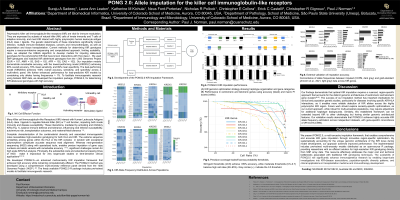
Aim: Killer cell immunoglobulin-like receptors (KIR) play a critical role in immune regulation and are linked to diseases like cancer, autoimmune disorders, and transplant outcomes. Current methods for KIR genotyping are costly and time-consuming, so we aimed to develop a computational tool to predict KIR variants more efficiently using existing genetic data
Methods: We adapted our earlier method, PONG (based on HIBAG), to develop models that predict KIR genotypes from SNP array data. Using whole genome SNP data from the 1,000 Genomes Project (including diverse ethnic groups), we built and tested models for all major KIR genes that interact with HLA class I molecules.
Results: Our models achieved high accuracy, with the less-performing model (KIR3DL2) still reaching 99% overall accuracy, while the best (KIR2DS4) achieved 100% accuracy. We further improved less accurate models by focusing on common genetic variants (>1% frequency)
Conclusion: We developed PONG2.0, a freely available tool that enables fast, cost-effective KIR genotyping from SNP data. This advancement will accelerate research into immune-related diseases, transplantation, and therapies by eliminating the need for expensive lab-based genotyping.